This scripture is from the time that the New Testament of the Bible reached its final form.

It is a Coptic manuscript from late antiquity, currently...

John van den Berg

John van den Berg

John van den Berg is the author of The Last Myth of Alexandria and The word of the Pistis Sophia. After travelling in Egypt, Tibet and Nepal he found answers of deep inner questions in an ancient scripture. The Codex Askewianus is commonly known as the gospel of the Pistis Sophia. A new translation in modern English to help people answer their own inner questions.

Books

Pistis Sophia: A journey through the spaces of the Ineffable

This scripture is from the time that the New Testament of the Bible reached its final form.
It is a Coptic manuscript from late antiquity, currently known by the scientific name Codex Askewianus, attributed to Anthony Askew. He acquired it at a London market in 1785. His heirs later entrusted it to the curators of the British Museum. At the end...

Read more

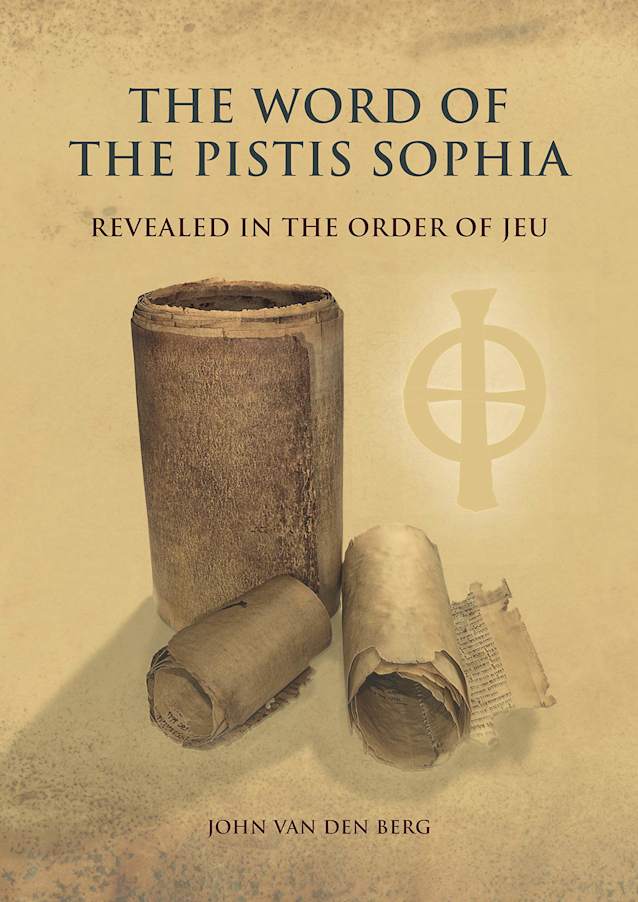
The word of the Pistis Sophia: Revealed in the order of Jeu

In late antiquity, in Egypt, the Jeuians write their inscrutable texts. In the 21st century there is again interest in the story of the Pistis Sophia among people who want to go the path of initiation. It is a late invitation to go aboard the heavenly ship of the Jeuians. The modern Egyptian mysteries of Osiris, Isis and Horus then become alive...

Read more

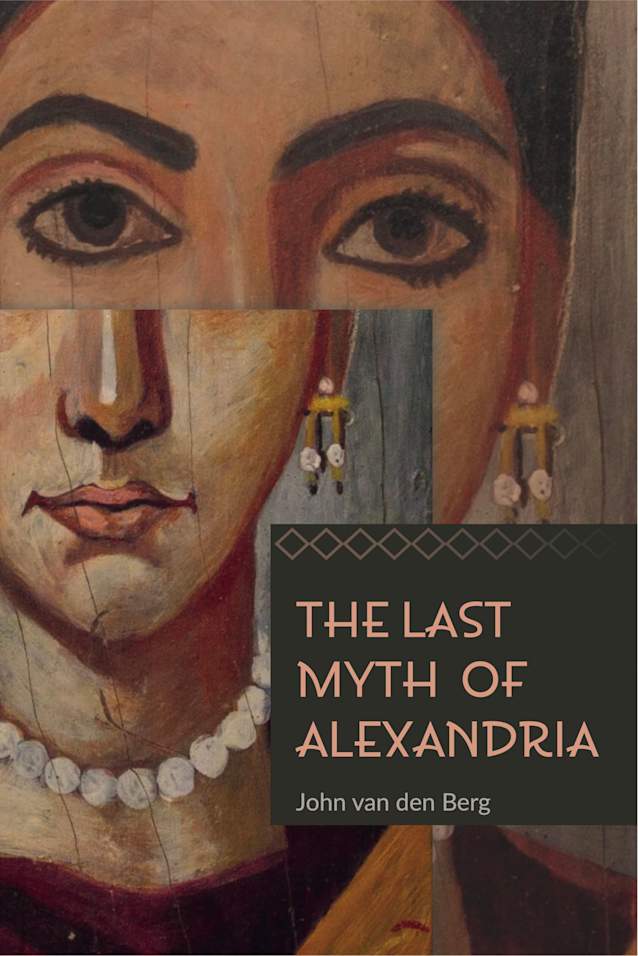
The Last Myth of Alexandria

It is the year 415. When the gods fall silent and the world turns its back on wisdom, a single act of hope sets a new journey in motion. In Athens, a father entrusts his daughter Helen to the fading city of Alexandria, desperate that she might find, and perhaps rekindle, the last embers of true knowledge. Arriving in a city haunted by the ruins...

Read more

Other Writing

The gospel of the Pistis Sophia is one of the few gnostic writings that were already available in the eighteenth century. An English translation appeared at the beginning of the twentieth century, so Carl Jung, for example, already had it in his bookcase. In the Sixties of the last century a Dutch translation appeared thanks to the Rosicrucian press. The collected Nag Hammadi writings that have become available in our time give a new image of the Pistis Sophia. She is the mythical...

Blog

Mysteries of the Pistis Sophia, reflection 8: Showing Repentance Christ is

Christ is the creator of the All in the pleroma. Pistis Sophia is the guardian of wisdom in the cosmic order within the All. Consequently, the light-humanity in the pleroma has the wisdom—that is, Sophia—of the Ineffable at its disposal as a power. When a part of humanity begins to live outside the pleroma, Sophia guides this humanity into the realm of life that then develops: the thirteenth aeon. Here Christ reveals Himself as the first mystery.

In the first book of the Gospel of the Pistis...

Mysteries of the Pistis Sophia, reflection 7: Controlling the astral fire

Suppose a soul has reached the point of reincarnating anew. It is in a virginal state, like a blank slate. The workers of the Order of Melchizedek guide this soul through this very delicate process of incarnation. In doing so, the soul is brought into a body and will learn, step by step, to express itself in a body of flesh and blood.

At the moment of incarnation, the soul is connected to an information field in which the essence of all previous incarnations is stored. The soul thus has a...

Mysteries of the Pistis Sophia, reflection 6: understanding the cosmic

When we look at the sky on a clear night, we are like a speck of dust compared to the expanse of stars and planets. If we look through a large telescope, the Earth, too, becomes a speck of dust in a seemingly infinite universe. Seen in space and time, we are nothing. Who are we, then, to contemplate the cosmos beyond what is perceptible to the senses?

There are many myths that were once put on paper to remind man of what he is in danger of forgetting, but which he needs in order to discover...

View All