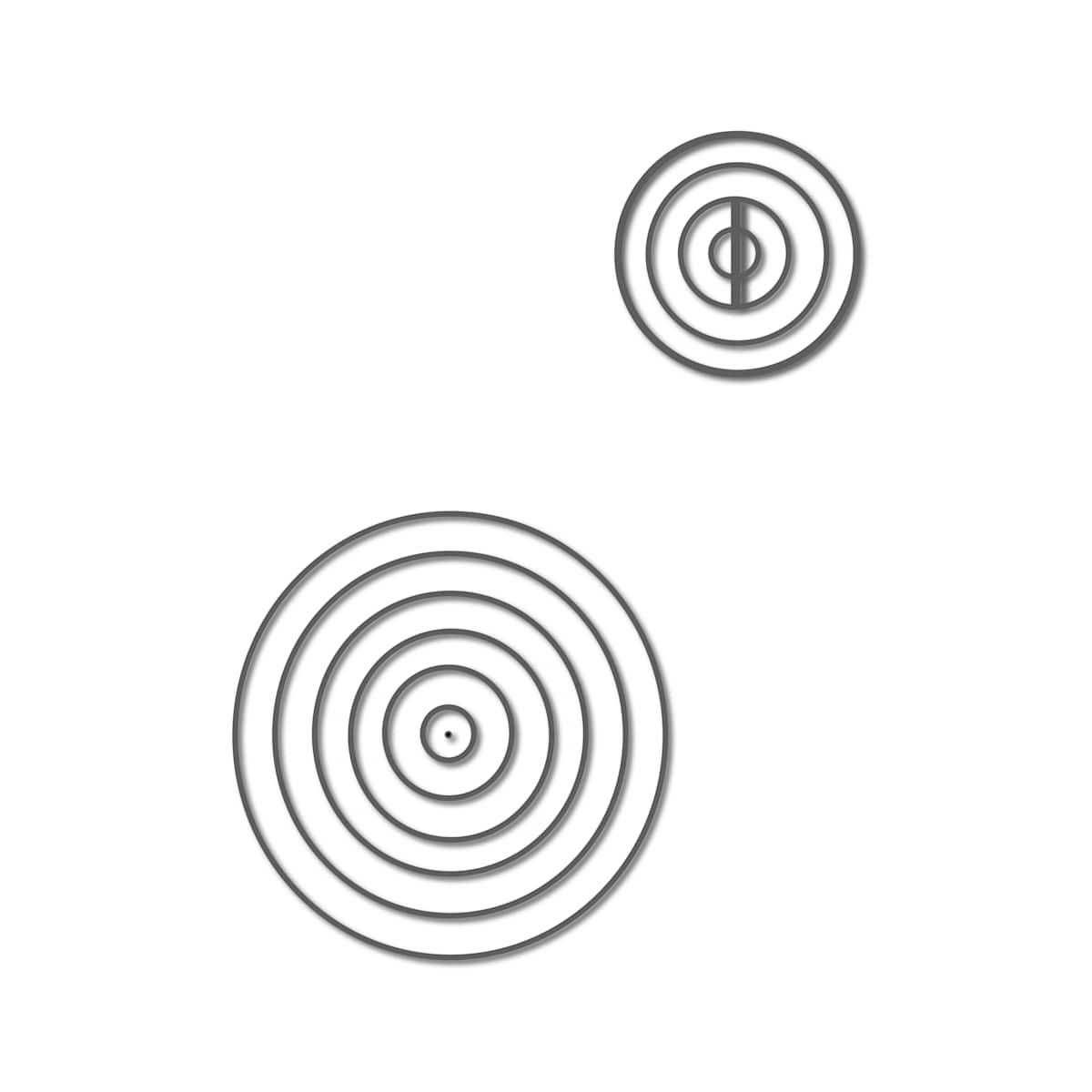
Christ is the creator of the All in the pleroma. Pistis Sophia is the guardian of wisdom in the cosmic order within the All. Consequently, the light-humanity in the pleroma has the wisdom—that is, Sophia—of the Ineffable at its disposal as a power. When a part of humanity begins to live outside the pleroma, Sophia guides this humanity into the realm of life that then develops: the thirteenth aeon. Here Christ reveals Himself as the first mystery.
In the first book of the Gospel of the Pistis Sophia, Jesus finds the Pistis Sophia beneath the thirteenth aeon. The perspective on the Pistis Sophia here is not from the pleroma, but from the world that emerged from the chaos. Jesus finds the Pistis Sophia in a state where she cannot enter the thirteenth aeon. She has, as it were, sunk deeper than her own creation, into a world where even the first mystery cannot penetrate. The first mystery therefore sends the Savior as a new companion for the Pistis Sophia. Jesus, the Savior, has thus come to lift the Pistis Sophia to the thirteenth aeon. When the law is fulfilled, Jesus may lift it by order of the first mystery. What does that mean?
All people find themselves in virtually the same situation. The soul is trapped in the wheel of fate of the archons, the wheel of birth and death. The forces of darkness, the archons and their rulers, hold the soul in their power, and it has consequently forgotten the luminous pleroma.
If the soul begins to remember its high origin again, the Saviour can connect with the human being who carries this soul within. The human being thereby becomes a conscious disciple of the Saviour, and the soul becomes a Pistis Sophia. Pistis means faith and Sophia means wisdom. To be able to penetrate once again to the true wisdom of the pleroma through faith and trust—that is the state of the soul. Our soul is thus a Pistis Sophia becoming aware of the fact that all bondage to darkness stems from the tendency to create outside the pleroma. The soul wants to create its own light-aeons with the light from the treasury of light. Its own egocentric conception of the creation of the Ineffable. As a result, the soul no longer sees the difference between the light from the treasury of light and the light of Authades, the human will. This creation of Authades is the power with the lion's face. This power assails the Pistis Sophia time and again, so that she loses all her light power.
In this state of consciousness, the soul, Pistis Sophia, begins to show repentance. The original word for repentance in the Coptic source text is metanoia. There is no good translation for this, for it means something like “beyond thought” or “consciousness beyond thought”. In the state of metanoia, the soul can enter the realm that is not limited by the human intellect. That state of the soul is what is meant by repentance. Pistis Sophia thus pronounces a twelvefold repentance, while she sings praise to the light of lights. For every eon, every sign of the zodiac, she pronounces repentance. Until the repentance is complete and, above all, a continuous state of being. For us, this is the development of a strong faith. A certain knowledge that the victory of light over darkness is imminent. The world may continue to exert its confusing influence upon us, but the heart is enveloped by Pistis Sophia and remains focused on the savior who brings the light. Then comes the moment when the light can pour itself out and sweep away all darkness.
The question, therefore, is how we can arrive at complete repentance in order to be able to remain in the light thereafter. In the first instance, we must then no longer be unconscious for a single moment. That sounds simple, but the tendency to make the egocentric part of our being function as well as possible in the world of space and time is great. Do we not want to become better, more honest, more loving, or smarter? In the first instance, it is important to continue observing within ourselves and to withhold no part of it. We often want to show a certain aspect of ourselves more than others. However, that is where the repression of thoughts and feelings into the unconscious part of our consciousness begins. We will certainly encounter them again later. True repentance is no longer wanting to add to or take away from who we are, with on the one hand a spark of light in our heart and a personality built from the forces of the archons. The middle way is the path of becoming aware of both aspects of our being.
Our soul begins to grow in the light of this consciousness. It is increasingly carried by the light, so that darkness can no longer hold upon it. Then comes the moment when the first mystery allows our soul to be absorbed into the thirteenth eon. When our repentance is complete. There, the Pistis Sophia connects with the Redeemer in an outpouring of light. The soul connects with the light-soul, as we can experience. And thus the Pistis Sophia is once again absorbed into the circle of the twenty-four invisibles, the twelve light-aeons with their companions. This is the crown of the creation of the Pistis Sophia: the return to the pleroma.
The miracle of life is that we can truly change. Our soul can become a Pistis Sophia again, fully focused on the return to the pleroma. The happiness that radiates through our soul is the Pistis that no longer departs from us. The Sophia will bring us the certainty of participation in the new life in unity with the Creator, the Ineffable.