This scripture is from the time that the New Testament of the Bible reached its final form.

It is a Coptic manuscript from late antiquity, currently...
John van den Berg

John van den Berg

John van den Berg is the author of The Last Myth of Alexandria and The word of the Pistis Sophia. After travelling in Egypt, Tibet and Nepal he found answers of deep inner questions in an ancient scripture. The Codex Askewianus is commonly known as the gospel of the Pistis Sophia. A new translation in modern English to help people answer their own inner questions.

Books

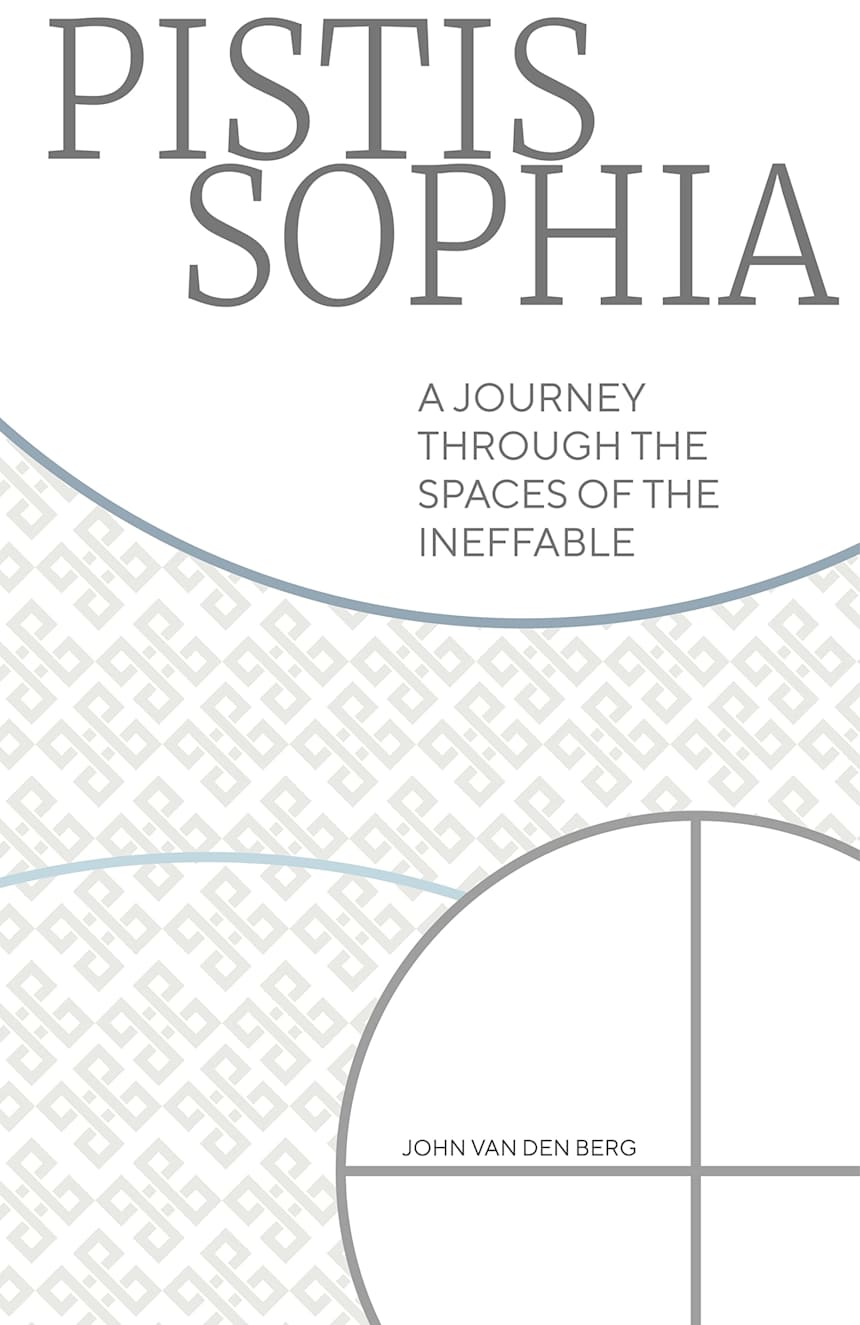
Pistis Sophia: A journey through the spaces of the Ineffable

This scripture is from the time that the New Testament of the Bible reached its final form.
It is a Coptic manuscript from late antiquity, currently known by the scientific name Codex Askewianus, attributed to Anthony Askew. He acquired it at a London market in 1785. His heirs later entrusted it to the curators of the British Museum. At the end...

Read more

The word of the Pistis Sophia: Revealed in the order of Jeu

In late antiquity, in Egypt, the Jeuians write their inscrutable texts. In the 21st century there is again interest in the story of the Pistis Sophia among people who want to go the path of initiation. It is a late invitation to go aboard the heavenly ship of the Jeuians. The modern Egyptian mysteries of Osiris, Isis and Horus then become alive...

Read more

The Last Myth of Alexandria

It is the year 415. When the gods fall silent and the world turns its back on wisdom, a single act of hope sets a new journey in motion. In Athens, a father entrusts his daughter Helen to the fading city of Alexandria, desperate that she might find, and perhaps rekindle, the last embers of true knowledge. Arriving in a city haunted by the ruins...

Read more

Other Writing

The gospel of the Pistis Sophia is one of the few gnostic writings that were already available in the eighteenth century. An English translation appeared at the beginning of the twentieth century, so Carl Jung, for example, already had it in his bookcase. In the Sixties of the last century a Dutch translation appeared thanks to the Rosicrucian press. The collected Nag Hammadi writings that have become available in our time give a new image of the Pistis Sophia. She is the mythical...

Blog

Mysteries of the Pistis Sophia, reflection 5: The wheel of birth and death

We are all born with our own unique destiny, and we cannot help but follow the path that destiny directs. Great powers guide our destiny because we are born from the Heimarmene. Here the archons rule. These Archons follow the laws of planets, which follow their orbits relative to the fixed stars. They bind these forces to humanity through what the Gospel of Pistis Sophia calls: the false spirit.

The false spirit thus keeps us bound to the fate we received at birth. It propels our lives along...

Mysteries of the Pistis Sophia, reflection 4: getting to know and recognize

What is our true intention regarding life? Are we focused on the light that has descended into our hearts, to surrender itself within our being, to give our lives a turn toward a different realm of life?

We may struggle with that question. We may experience the light from the depths of our being, but we may get distracted and forget about it from time to time. Perhaps we sometimes become impatient, wanting to know exactly how we are doing and whether liberation is imminent. Or we may want to...

Mysteries of the Pistis Sophia, reflection 3, approaching the mysteries

Mysteries of the Pistis Sophia, reflection 3, approaching the mysteries

There is a luminous reality in the pleroma where the creator, the Ineffable, can directly reveal himself to Adam of light, as the ancients called this humanity. They also spoke of the pre-existent Christ, who is eternally existent, in contrast to our reality, which is defined by the experience of space and time.

Humanity that turns away from the pleroma loses its garments of light, as many of the Nag Hammadi scriptures...

View All